
Ramadan: Student Experiences at OHS
Ramadan- the ninth month of the Islamic calendar known for fasting, prayer, and upliftment of spirit- is observed by Muslims around the world. During this time, Muslims abstain from eating and drinking from dawn to dusk. Apart from fasting, there is also a focus on reading and understanding the Quran (the holy book of Muslims), prayer, self-discipline, and charity.
At OHS, we asked students to share their experiences of fasting and attending school. Although it affects their daily routine, students have also spoken of the significance of this time of the year. While it is true that you might have less energy, Ali Fasihuddin ’26 says, “fasting isn’t actually the hardest part… you can adjust to it in just a few days." He says the difficulty is actually adjusting to the new sleep schedule. Amari Iqbal ’28 talks of the larger significance of this time of the year and says, “It’s also fasting from bad habits, not just food.” Fasting is not just abstaining from eating and drinking, but there is also a fasting of the senses, which actually means putting in an effort to abstain from what is considered impure and sin.
Varying levels of awareness surrounding Ramadan were reported from students who do not observe the fast. Some commented they noticed slight changes in the level of concentration of those fasting, while others stated they did not notice any significant difference. Polina Petryaeva ’29 suggests that students and teachers can support those who are fasting by taking the time to "learn more about Ramadan and similar traditions." Other students mentioned similar accommodations, such as being mindful of scheduling around early morning or evening meals.
Several students reflected that balancing their studies and fasting was difficult, yet they also stated that the month is a fulfilling and meaningful one for them because of both personal and spiritual benefits experienced through the month-long fasting. When students are aware of the activities occurring throughout the month, that creates a positive experience for the students who participated in fasting, as well as the students in their classes that did not participate. Increasing awareness and understanding of cultural practices is beneficial to the greater number of students, as it helps students learn better together and build stronger relationships. Providing an increase in mindfulness within school environments creates an environment that facilitates greater cohesion among students with differing experiences and practices, making it easier for students from differing backgrounds to work together.
The following are the results of anonymous surveys for students who observe Ramadan followed by those who do not:
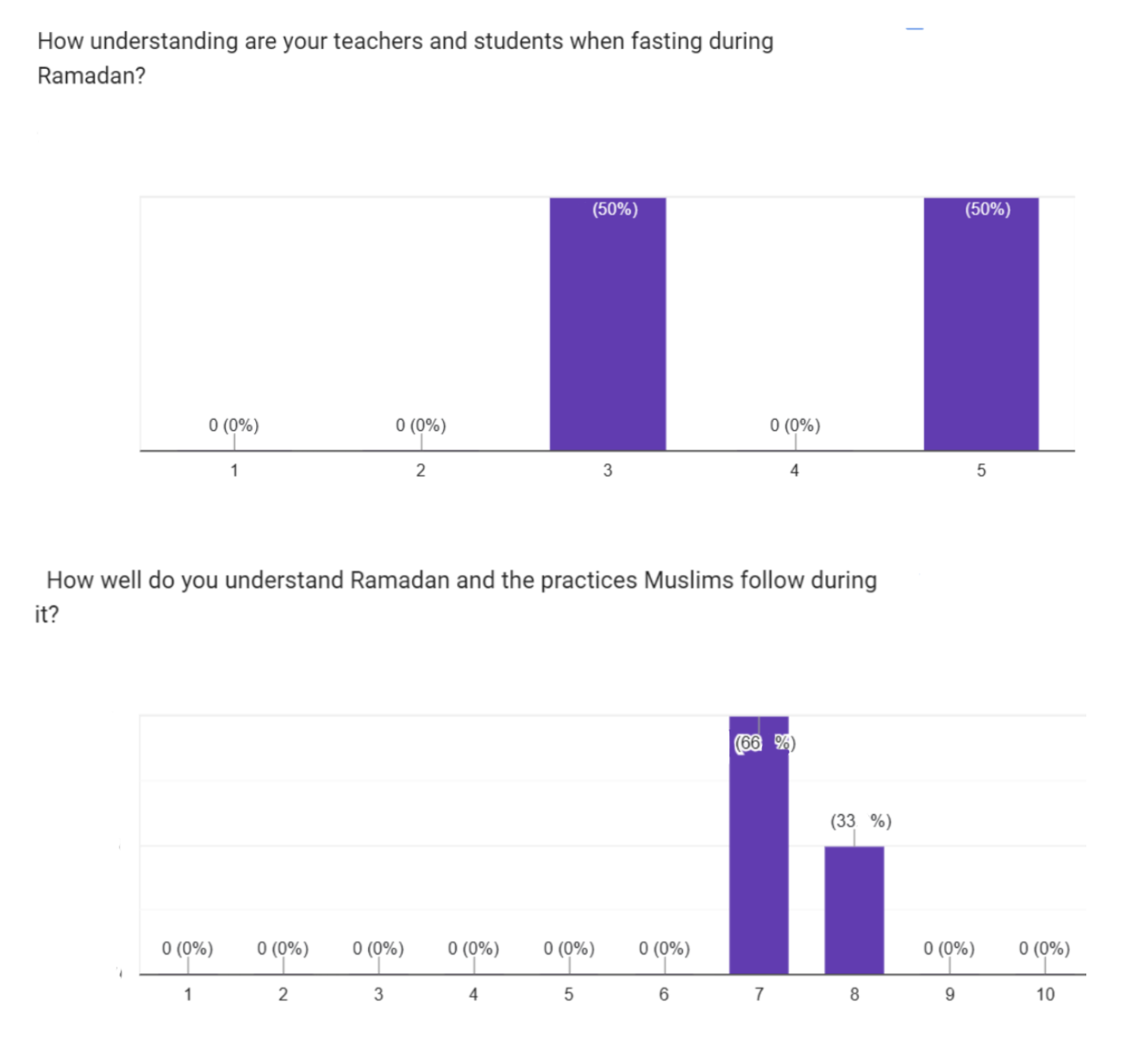
The results of this survey show the current awareness of students at OHS of different backgrounds, encouraging both students and teachers to increase mindfulness of all practices, beliefs, and perspectives within our school community.